Basketball Club Teams San Diego and Their Role in Player Development
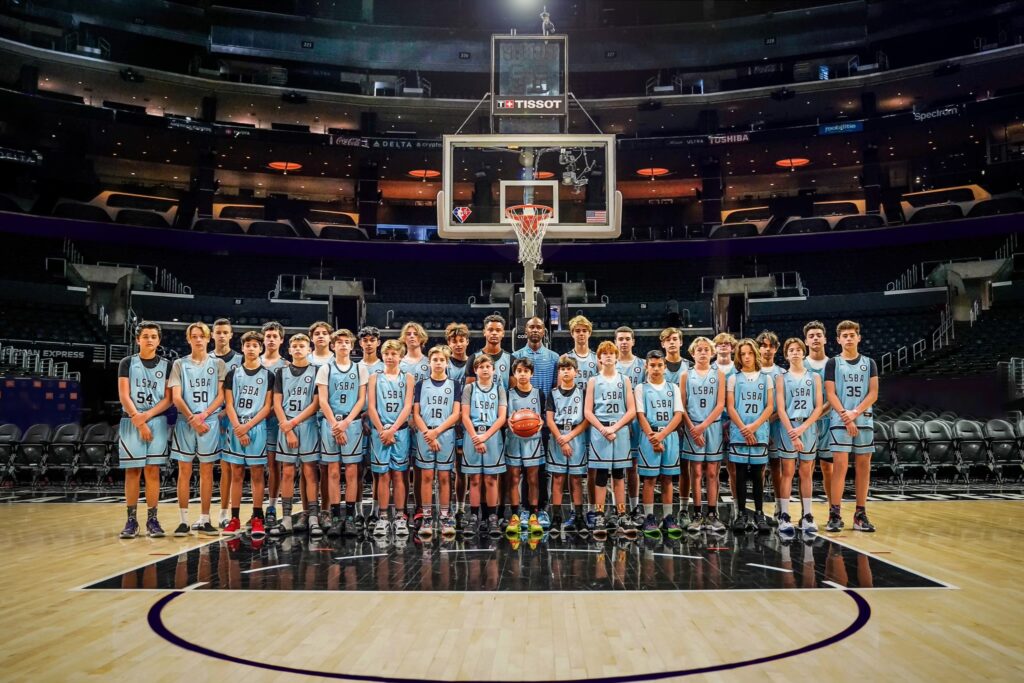
San Diego has always had a layered basketball culture. It is not the loudest basketball city in the country, and it does not market itself the way Los Angeles, Chicago, or New York often do. Yet that relative quiet hides something valuable. The region has a deep network of coaches, gyms, trainers, school programs, and club teams that shape players steadily over time. For families trying to understand where growth really happens, that matters far more than hype.
When people talk about Basketball Club Teams San Diego, they often focus on tournaments, rankings, travel schedules, or social media highlights. Those are visible. Player development is less visible. It happens in a weekday workout where a guard finally learns to change pace instead of just playing fast. It shows up when a post player learns to seal early, catch on balance, and finish through contact with either hand. It appears when a teenager who used to drift on defense starts communicating every possession and becomes someone a coach can trust.
Club basketball can accelerate those changes, but only when the program is built with development at the center. That distinction is important. Not every club team develops players equally, and not every talented player needs the same environment. The best clubs in San Diego understand this. They know that skill, confidence, discipline, and basketball IQ tend to grow together, or not at all.
What club basketball really adds to a player’s growth
School basketball still matters. It always will. High school teams give players identity, community, and meaningful games with classmates in the stands. But club basketball fills gaps that school seasons often cannot address.
The first gap is volume. A typical school season is intense but relatively short, and coaches are working with roster constraints, game prep, and team systems. Club basketball extends the calendar. It gives players more months to compete, more film to review, and more touches against a wider range of opponents. That matters for development because repetition under pressure is where skills become usable.
The second gap is specialization. A good club setting can offer focused guard work, post development, shooting mechanics, footwork sessions, and position-specific reads. High school programs vary widely in resources. Some are excellent. Others simply do not have enough practice time or staff to individualize instruction. A strong club can step into that space.
The third gap is exposure to different styles of play. In San Diego alone, players might face disciplined half-court teams, long and athletic transition teams, pressing teams, and groups with high-level shooters spread across every position. Travel ball expands that even further. That kind of competition forces adaptation. It teaches players that what works against one opponent may fail against the next unless they can read the game.
A young wing might dominate a local middle school league with straight-line drives. Put that same player in a club tournament against disciplined help defenders and longer athletes, and suddenly the skill package needs to expand. Can they stop in two feet, pivot out, make the skip pass, or pull up at the elbow? Those adjustments are the substance of development.
San Diego’s basketball landscape creates a unique training ground
San Diego is an unusual market because it blends several basketball worlds at once. There are suburban communities with strong youth participation, urban pockets full of instinctive players who learn the game through constant competition, and a year-round climate that supports steady training. Add in proximity to Orange County and Los Angeles, and the level of available competition rises quickly.
That geography shapes Basketball Club Teams San Diego in practical ways. Local clubs often have to prepare athletes not only for county-level games, but also for regional tournaments where the physicality, pace, and depth are noticeably higher. A team that can survive in San Diego still has to sharpen its execution if it wants to compete consistently beyond the area.
This has one healthy effect on development. Coaches cannot hide weaknesses for long. If a team lacks shooting, ballhandling depth, defensive toughness, or late-game composure, tournament play reveals it almost immediately. For players, that exposure can be uncomfortable, but it is useful. The right program turns losses into information rather than excuses.
I have seen this dynamic play out with young players who looked polished in local gyms and then struggled the first time they faced size and pressure over an entire weekend. At first, parents sometimes interpret that as a bad weekend. Coaches with experience see something else. They see a player learning how narrow the margin is. That realization often becomes the turning point.
The best club teams teach habits, not just plays
A lot of families judge teams by wins, and some of that is understandable. Winning often reflects organization, talent, and commitment. But for development, habits are the better measure.
A well-run club program teaches players how to practice. That means sprinting into drills, listening the first time, getting into stance without being reminded, and competing on routine repetitions. It also means understanding why details matter. A closeout angle, a jump stop, a properly timed cut, or a strong-side tag may not create viral clips, but they change games.
The strongest coaches in club basketball tend to repeat the same few themes for months because real development is stubborn. Most players do not need twenty new concepts. They need five important ones reinforced until they become second nature.
Those themes usually include spacing, decision-making, shot quality, defensive accountability, and emotional control. Watch a mature club team in a close game and you can usually tell whether those habits were coached consistently. The players huddle with purpose, they know where their outlets are, they understand foul and clock situations, and they do not unravel after a turnover or bad whistle.
That last piece is undervalued. Emotional regulation is a skill. Club basketball gives players repeated chances to build it because the environment is unpredictable. Tournament games can run late. Officiating varies. Teams may play multiple times in one day. Legs get heavy, tempers rise, and attention slips. Players who learn to stay composed in those settings are developing something that translates well beyond basketball.
Skill development looks different at every age
One of the most common mistakes in youth basketball is treating development as if it were the same from age 10 through age 17. It is not. Good club teams adjust their priorities based on where players are physically, mentally, and competitively.
For younger players, the emphasis should be broad. They need movement skills, balance, coordination, dribbling with both hands, layups from different angles, passing on time, and basic defensive footwork. Position labels should be soft at this stage. A tall 11-year-old should still handle the ball. A small player should still learn to rebound and finish in traffic. Early specialization often creates visible strengths and hidden weaknesses.
By the middle school years, decision-making becomes more important. Players need to understand how to play with teammates, not just around them. They should learn how to attack closeouts, use screens, move without the ball, and defend in help positions. This is also when confidence can become fragile. Some players grow early and dominate physically, then struggle later when others catch up. Others are undersized at 13 and blossom at 16. Club coaches who understand that developmental timing is uneven can keep players improving without rushing judgment.
At the high school level, the process becomes sharper. Skill work should connect directly to role clarity. A lead guard needs poise, pace, and turnover discipline. A wing must defend multiple positions, shoot consistently, and make fast reads. A forward benefits from finishing through contact, switching defensively, and passing under pressure. If a player has college aspirations, the gap between generic training and role-specific development becomes even more important.
Competition is useful, but only at the right dose
Parents often ask whether stronger competition always leads to faster improvement. Usually, the honest answer is no. Competition helps when it stretches a player without drowning them.
If a player dominates every game, bad habits can stick. They may never need to pass on time, defend with urgency, or finish creatively because pure athleticism solves everything. On the other hand, if a player is overmatched every weekend, confidence erodes and meaningful reps disappear. Development tends to happen in the middle ground, where the game is hard enough to demand adjustment but not so hard that the player stops trying things.
That is one reason team fit matters so much. Being on the most famous club is not automatically the best developmental choice. Some players improve faster on a team where they play real minutes, handle the ball in pressure situations, and are expected to solve problems on the floor. Others need the discipline and daily standards that come from practicing around elite peers, even if their role is smaller for a time.
There is no universal formula. A player who is late to the sport may need touches and patience. A highly skilled but inconsistent player may need structure, accountability, and tougher competition. The best Basketball Club Teams San Diego can usually identify that distinction quickly.
Coaching quality is the separating factor
Facilities, uniforms, and tournament schedules are easy to see. Coaching quality takes more time to evaluate, but it is the difference-maker.
A developmental coach does several things well at once. They teach clearly. They correct without humiliating. They hold standards consistently. They can break down film, design purposeful practices, and explain what a player needs next, not just what they did wrong.
They also understand that improvement is not linear. Players plateau. Growth spurts affect coordination. Shooters lose rhythm. Confident kids get tentative after a few bad weekends. Good coaches stay steady through those phases. They make changes, but not out of panic.
Parents sometimes miss this because they focus on visible outcomes. Did my child start? How many points did they score? Did the team win? Coaches focused on development look one layer deeper. Did the player make better reads than last month? Are their feet cleaner on defense? Are they stronger with the ball? Are they becoming reliable in a role?
Those are harder questions, but they reveal more.
Here are a few signs that a club program is serious about development:
- Practices have structure, pace, and clear teaching points.
- Coaches give specific feedback rather than generic encouragement.
- Players improve in decision-making, not just confidence.
- Roles are communicated honestly and revisited as players grow.
- Skill work matches game situations instead of isolated drill theater.
That last point deserves emphasis. There is a lot of training that looks impressive in a short video clip and does not transfer well to real games. Fancy cone work, low-percentage finishes, and endless dribble combinations can entertain, but basketball development depends on context. Can the player use the move at full speed, under pressure, while reading help defense? If not, the value is limited.
The recruiting conversation often starts too early
San Diego families, like families everywhere, can feel pressure around recruiting. Club basketball sits close to that pressure because tournaments bring visibility and coaches often act as connectors between players and the next level. Exposure matters, but it should not outrun development.
A freshman who can already play physically, defend, and shoot with consistency may attract attention early. Most players are not there yet, and there is no shame in that. The danger is when families chase circuits, branding, or status before the player has built the foundation to benefit from those opportunities.
College coaches do watch club environments. They also notice substance quickly. They care about how a player moves, competes, communicates, and responds when things go poorly. They care whether the player can help a real team. A weekend of empty scoring on poor efficiency does less than many families think. A disciplined defender who rebounds, talks, rotates on time, and makes open shots often leaves a stronger impression.
The healthiest recruiting path usually looks less glamorous from the outside. Get better. Build film that reflects actual strengths. Compete against good players. Let college fit, academic goals, and long-term improvement guide decisions. The right club program will reinforce that message instead of selling shortcuts.
What parents should look for before choosing a team
The club landscape can be confusing because almost every program promises development. The language is easy. The proof takes observation.
Parents should watch a full practice if possible, not just a game. Games can be misleading because talent can cover a lot. Practice reveals priorities. Are players standing around? Is teaching rushed? Do coaches spend time on fundamentals? Is correction sharp but respectful? Does everyone know where to be?
It also helps to look at older players who came through the program. Not just the stars, but the middle of the roster. Did they become more skilled, more confident, and more fundamentally sound over time? A program’s true developmental record usually shows up there.
A few practical questions can clarify a lot:
- How many practices are held each week, and what is the balance between team concepts and skill work?
- How are playing time and roles handled during developmental stages versus showcase events?
- What is the communication style with parents and players?
- How does the staff support players who are improving at different rates?
- What does the program believe a successful season looks like beyond wins and losses?
The answers do not need to be perfect or polished. In fact, overly polished answers can be a warning sign. Honest, specific answers are more useful. A coach who can explain why a player may need patience in one season to make a bigger jump the next usually understands development better than someone who promises everything immediately.
The hidden benefits players carry into adulthood
Not every club player will play in college, and even fewer will play beyond that. That does not reduce the value of a strong club experience. In many cases, the most durable outcomes are not resumes or rankings. They are habits.
A player who learns to accept coaching, manage nerves, prepare for travel, recover between games, and work through setbacks is building a professional mindset long before adulthood. They are learning how to perform when tired, how to coexist with different personalities, and how to stay focused when roles shift.
Basketball also gives players a rare form of honest feedback. The game does not bend easily. If a player cannot guard the ball, they get exposed. If they cannot make the pass on time, the possession breaks down. If they do the work and improve, the evidence shows up too. That clarity can be grounding for teenagers.
San Diego’s better club programs understand this broader role. They are not just trying to build tournament teams. They are shaping competitors who can handle challenge. Some players leave with scholarships. Others leave with stronger discipline, better communication skills, and a deeper understanding of how progress actually happens.
Why the local ecosystem matters so much
Player development is never the work of a single coach or team. It is an ecosystem. In San Diego, that ecosystem includes school coaches, private trainers, strength coaches, physical therapists, parents, and club directors. When those pieces align, players tend to thrive.
The most successful cases usually have consistency across environments. A player hears similar messages from their high school coach and club coach about shot selection, defensive habits, and leadership. https://garrettpozx814.cavandoragh.org/the-most-popular-basketball-club-teams-san-diego-has-to-offer Their trainer sharpens details that support the role they play in games. Their parents encourage effort and perspective rather than obsessing over status. That kind of alignment can make development feel almost straightforward.
When the messages conflict, progress slows. A club coach may be teaching ball movement while a trainer encourages endless isolation play. A parent may undermine role acceptance by focusing only on scoring. A school coach may expect discipline while the player’s off-season environment rewards freelancing. None of this is unusual, but it does matter.
That is another reason the conversation around Basketball Club Teams San Diego should be more nuanced than simply asking which teams win the most. The better question is which programs fit into a healthy developmental ecosystem. Which ones teach the game properly, support the player honestly, and create a setting where improvement is measurable over time.
That is where club basketball earns its value. Not in slogans, and not in weekend noise. In the daily, demanding work of turning potential into dependable skill. In giving players enough coaching, competition, and accountability to discover who they are on the court, and who they can become off it.
Lamont Smith Basketball Academy
888 Clairemont Mesa Blvd Suite T-2, San Diego, CA 92123
(619) 639-8778
FAQ About Basketball Club Teams San Diego
How can a player join an LSBA club team?
Players are evaluated during practices so the coaching staff can recommend an appropriate team and development level. Families should contact the academy to confirm current openings and evaluation details.
Are club teams available for newer basketball players?
Yes. LSBA describes multiple levels, including a developmental option for newer players as well as more competitive teams for athletes with prior club experience.
What do LSBA club team practices emphasize?
Practices emphasize basketball fundamentals, team defense, structure, communication, and player development. The specific focus may vary according to the team and experience level.
Do all LSBA teams travel?
Travel expectations vary by level. Some teams focus on local competition, while advanced teams may participate in tournaments elsewhere in Southern California or beyond. Families should confirm the current schedule before enrolling.